Summer of 2026 in Oakland
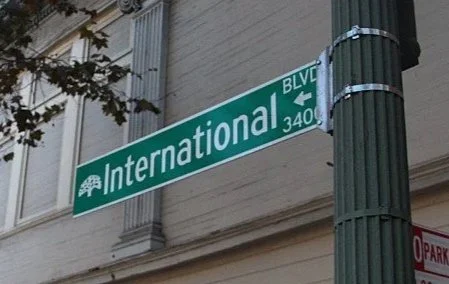
On July 8, 2026, the Oakland City Council voted 6-1-1 to install barricades closing 9th, 10th, and 11th Avenues near International Boulevard - known as "the Blade" - for six months, funneling activity onto the main boulevard where OPD can concentrate enforcement.
The city tried this exact move on East 15th Street in 2023: recorded incidents on 15th dropped to almost nothing, but incidents on the blocks now being closed rose. The activity didn't disappear. It moved next door.
Court filings that became public this month add more context: an Oakland police officer posed as a sex worker on International Boulevard as part of an undercover sting that led to a felony-pandering arrest. It's one more example of how much enforcement capacity is currently pointed at this single stretch of road.
We're also hearing, through word of mouth, that there were sweeps and arrests of workers on International Boulevard this past weekend. We haven't been able to indepeAndently confirm details yet, but we're taking the reports seriously and will share more as we learn it. If you were out there or know someone who was, please reach out to us directly - we want to know what people are experiencing on the ground, not just what's in a City Council agenda.
How Did We Get Here?
None of this came out of nowhere. Oakland's own City Council didn't hide the connection - Councilmember Wang's staff report says the new local ordinance exists "to conform to and expand on" California Assembly Bill 379 by name. A small but important change in California law at the start of 2026 set it in motion, and we want to make sure you understand it and know your rights.
All too often, criminalization is slipped into a law at the last second or in a way that is confusing. Other times it comes draped in the language of saviorhood, or is crammed together with actually helpful legislation, making it palatable to people who either don't understand sex work or want to see it eliminated at all costs, no matter the real world consequences.
This new law - AB 379 - is an all of the above situation.
Understanding AB379
In 2022, California passed SB357, called the "Safer Streets for All" act. SB357 was sponsored by a coalition of current and former sex workers, alongside groups like St. James Infirmary, SWOP LA, TransLatin@ Coalition, Positive Women's Network-USA, Equality California, and the ACLU of California - this was our community's bill, built by the people it protects. It did two things that affected workers:
Police could no longer arrest people for the vague crime of "loitering for prostitution."
People who had been arrested and convicted of loitering for prostitution could go through the process of clearing their records.
The old loitering law was so vague that it functioned as a profiling tool: Trans women, and Black and Brown women in particular, were stopped and arrested simply for standing on a sidewalk. SB357 took that tool away from police.
Even these modest changes to state law were opposed by lawmakers, police, and attorneys on both sides of the political aisle who seek to control and oppress sex workers, rather than provide real support.
Last year, this led to the authoring of AB379. It was signed into law that July and took effect January 1, 2026. On paper, AB379 only targets buyers: it creates a new misdemeanor, Penal Code 653.25, for loitering in a public place with intent to purchase commercial sex. Technically, the loitering-to-sell law that SB357 repealed stays repealed. But the mechanism of AB379’s new misdemeanor is identical to the one SB357 took away from police - the same vague "loitering" pretext is now relabeled as evidence of buyer intent.
According to the bill, intent can be shown by:
"Circling an area in a motor vehicle and repeatedly beckoning to, contacting, or attempting to contact or stop pedestrians or other motorists;"
"Making unauthorized stops along known prostitution tracks;"
"Engaging in other conduct indicative of soliciting to procure another to engage in commercial sex."
Officers can't verify intent before they make a stop, and history shows exactly who gets swept up when they try. According to its authors, AB379 is only meant to go after buyers - but its effects cannot be disentangled from the providers it claims not to harm. AB379 effectively hands police back the tool SB357 took away, just with a different name on it, and it's been pushed as an anti-human trafficking measure the whole way through.
Safer Streets or More Police?
Concerns about human trafficking have long been used, very effectively, to further criminalize voluntary sex work and the spaces sex workers occupy. It allows people across the political spectrum - some acting out of bigotry, others simply misinformed - to target sex workers behind a very legitimate issue.
Two things are true at the same time here:
Human trafficking is a horrifying practice.
Increased police presence on our streets does not adequately prevent human trafficking, while also entangling voluntary sex workers into the legal system.
A lack of nuance flattens reality.
Criminalization of sex work drives activity into the shadows, where even fewer protections are guaranteed for the vulnerable.
Policymakers have left us out of conversations about our own safety, framing us as incapable of knowing what's in our own best interests.
New legislation puts more laws and policing in our spaces, creating more danger from all sides in a world already hostile to our work and livelihoods.
AB379 is more of the same, and we're seeing this play out in the streets of Oakland. Again.
Where the Resources Should Go
BAWS advocates for decriminalizing sex work as a way to keep sex workers out of the legal system and meaningfully address exploitation and trafficking - by tackling what actually drives people into exploitative situations in the first place. That means affordable housing, childcare, and living wages; real access to healthcare, shelters, and IPV support; and investment in youth, foster care, and queer youth programs. Those are the resources that would change people's material lives in Oakland, giving them what they need to enter or exit the sex trade on their own terms.
To be clear: decriminalizing sex work does not make trafficking or exploitation legal. That legal distinction matters. But the real question isn't which legal categories we draw - it's where we put our resources, and right now those resources go to enforcement. Oakland passed a new Ordinance in February 2026, raising fines on buyers and traffickers and is projected to bring in $250,000 to $450,000 a year in citation revenue on its own. And AB379's state-level survivor fund and Oakland's own local one - both created by fine revenue. These survivor funds are portrayed as self-funding, but they’re actually built to extract revenue from enforcement, not fund an exit from it. We know that you can not arrest our way out of human trafficking. Yet the response keeps defaulting to the same tool: more enforcement, dressed up as protection.
Meanwhile, a local rape crisis center just closed its doors for lack of funding, and surveys of young trafficking survivors in the Bay Area show most face housing insecurity, with many reporting no income at all. These are the gaps that actually put people at risk - not a lack of policing.
We hope this helps you feel informed, prepared - maybe a little infuriated - and ready to keep each other safe. Oakland has chosen police funding over community investment for a long time - and for just as long, people have fought back. That fight is alive right now, and we're in it.
Join us in following these updates, informing others, and sharing this blog post. If you're involved in any type of street outreach or care work, reach out to us for info and resources. Attend our local City Council meetings and bring friends. Meet with Councilmember Charlene Wang or call her office at 510-238-7002 to set up a meeting, and let her know why these street closures and fines don't work.
In Solidarity - BAWS